Water, Heat & UV: Engineering Grass for the Gulf
Water: The First Casualty of Natural Turf
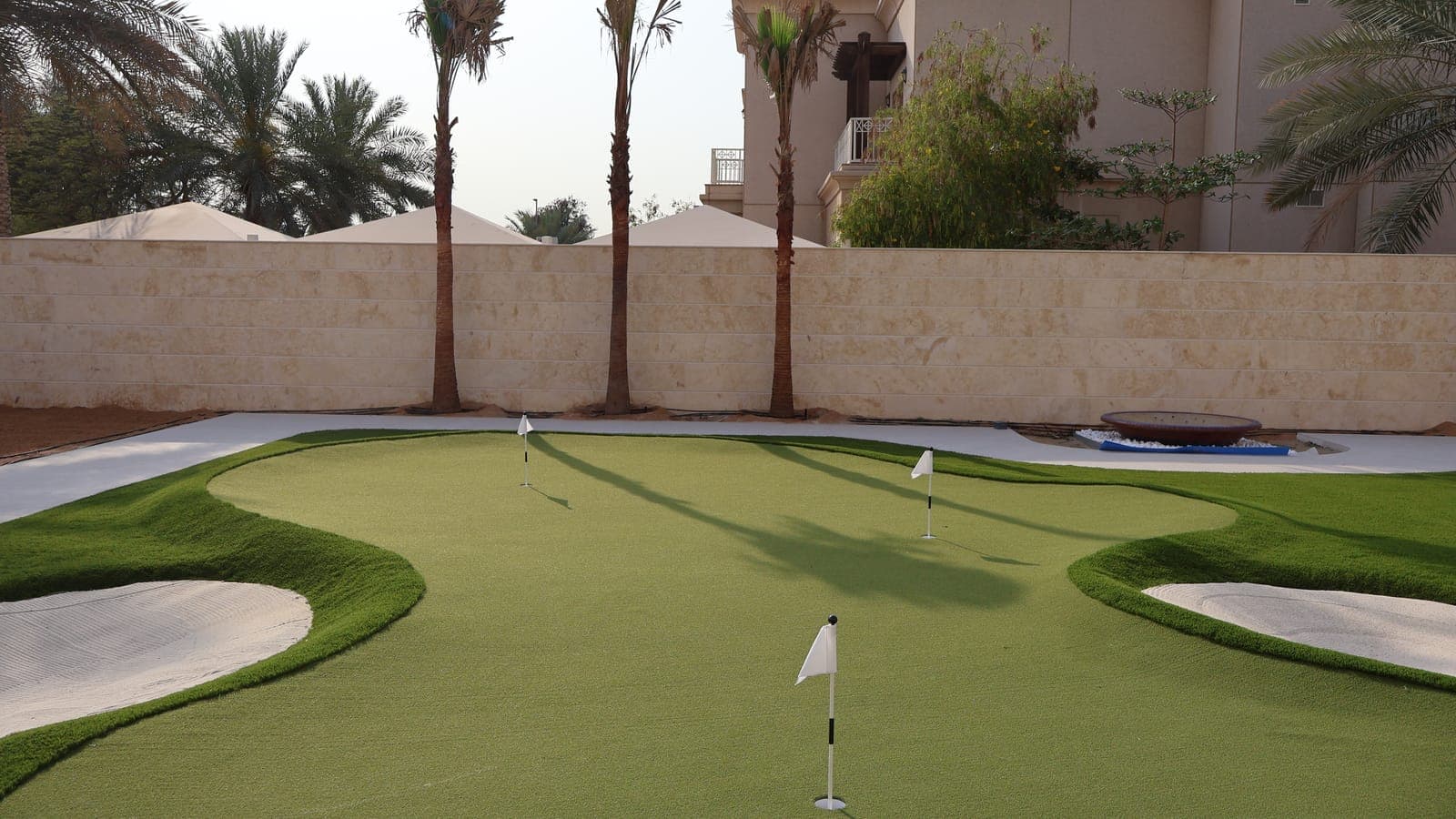
Maintaining natural golf turf in the Middle East demands significant irrigation that the climate simply doesn't supply on its own. A synthetic green removes that demand almost entirely, delivering roughly a 90% reduction in annual water use compared with natural turf, without giving up the playing surface a real green provides.
Heat: Why Ordinary Artificial Grass Fails
Generic artificial turf, built for football pitches or decorative landscaping, wasn't engineered for a golf ball's impact or for the maintenance hours a golf surface actually needs. Riviera Grass's system cuts maintenance hours by roughly 85% against natural turf, specifically because the construction, turf density, infill load and energy-absorption layer, is specified for golf performance rather than adapted from a different sport.
UV: The Slow Fade
Constant UV exposure is what turns cheap artificial turf grey and brittle within a couple of seasons. Colour consistency is one of the starkest differences in the Gulf: natural turf holds consistent colour only about 55% of the year, while a properly engineered synthetic surface holds it year-round.
Engineered for the Climate, Not Fighting It
Water, heat and UV are the same three forces that make natural turf such high-maintenance ground in the Gulf. Natural greens in the region also face fungal diseases that can spread quickly and leave brown, patchy areas, especially through the summer months. Riviera Grass's approach is to design around them from the material up, delivering a consistent, vivid, playable surface all year round rather than one that needs constant intervention to survive the climate it's installed in.
Ready to talk about your own green?
Share a few details and a Riviera Grass specialist will usually reach out within two hours.